
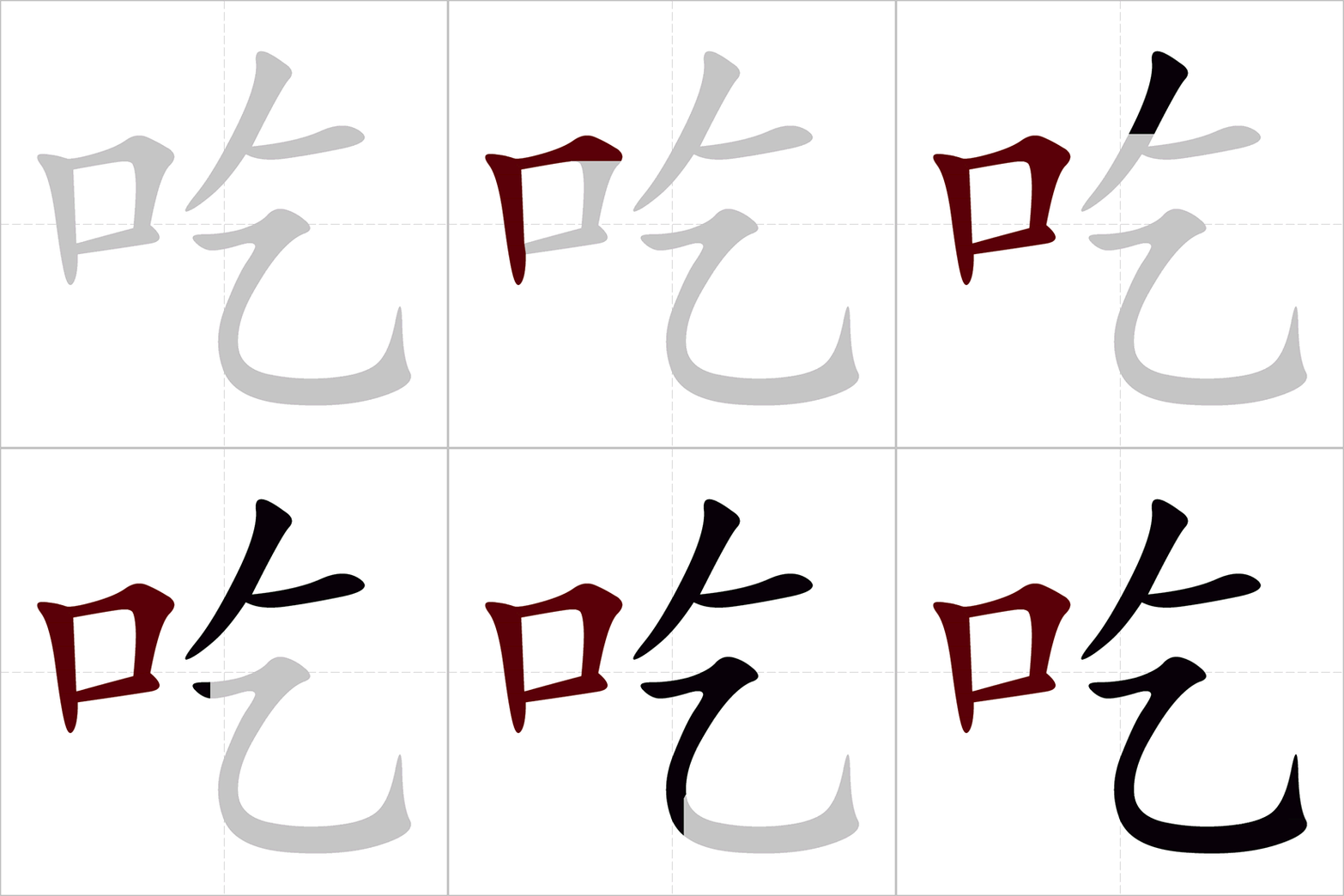
吃 (chī) is a character that’s all about the act of eating, and its structure vividly portrays this essential human activity.
Here’s the breakdown:
- 口 (kǒu): This component, representing “mouth,” is a common radical in characters related to speech, eating, or anything involving the mouth. It’s a clear visual cue that this character has something to do with the mouth.
- 乞 (qǐ): This component originally depicted a person with an open mouth, as if begging or requesting something. In this context, it represents the act of opening one’s mouth to eat.

Combining these elements, 吃 creates a clear picture of someone with their mouth open, ready to consume food. This simple image effectively captures the act of eating.
The character 吃 is used in countless contexts related to food and eating:
- 吃饭 (chīfàn): To eat a meal
- 吃东西 (chī dōngxi): To eat something
- 好吃 (hǎochī): Delicious (literally “good to eat”)
- 吃惊 (chījīng): To be surprised (literally “to eat a shock”)
- 吃亏 (chīkuī): To suffer a loss (literally “to eat a loss”)

Interestingly, 吃 can also be used metaphorically to express the idea of “experiencing” or “suffering” something, as in “吃苦” (chīkǔ – to endure hardship) or “吃亏” (chīkuī – to suffer a loss).
By understanding the visual representation of 吃, we can appreciate its direct connection to the act of eating and its broader metaphorical applications, highlighting the importance of food and consumption in Chinese culture and language.

 How to write Chinese